Introduction
In 2026, global shipments of mixed reality headsets are expected to exceed 50 million units. As AI-driven multimodal interaction becomes mainstream, the competitive focus of human-machine interfaces is shifting from "display" to "perception." Whether it's Apple Vision Pro's deep integration of eye tracking or Meta Orion AR glasses using gaze-contingent rendering as a core selling point, eye tracking has become a critical gateway to next-generation computing platforms. Moreover, eye tracking is a key technology for exploring brain consciousness, emotion, and cognition. Yet a long-standing challenge remains unresolved: in everyday scenarios such as bright outdoor light, complex shadows, or even when the user squints or eyelashes obstruct the view, the recognition rate of traditional eye movement features based on the pupil, iris, or glints drops sharply, causing a severe loss of accuracy. Cosmetic contact lenses, which are easily accessible and widely accepted as a highly fashionable decorative item, are often seen as an interference factor in eye tracking. But consider this from another angle: cosmetic lenses feature vivid colors and regular patterns - could they themselves serve as eye movement features, paving a completely different path for eye tracking?
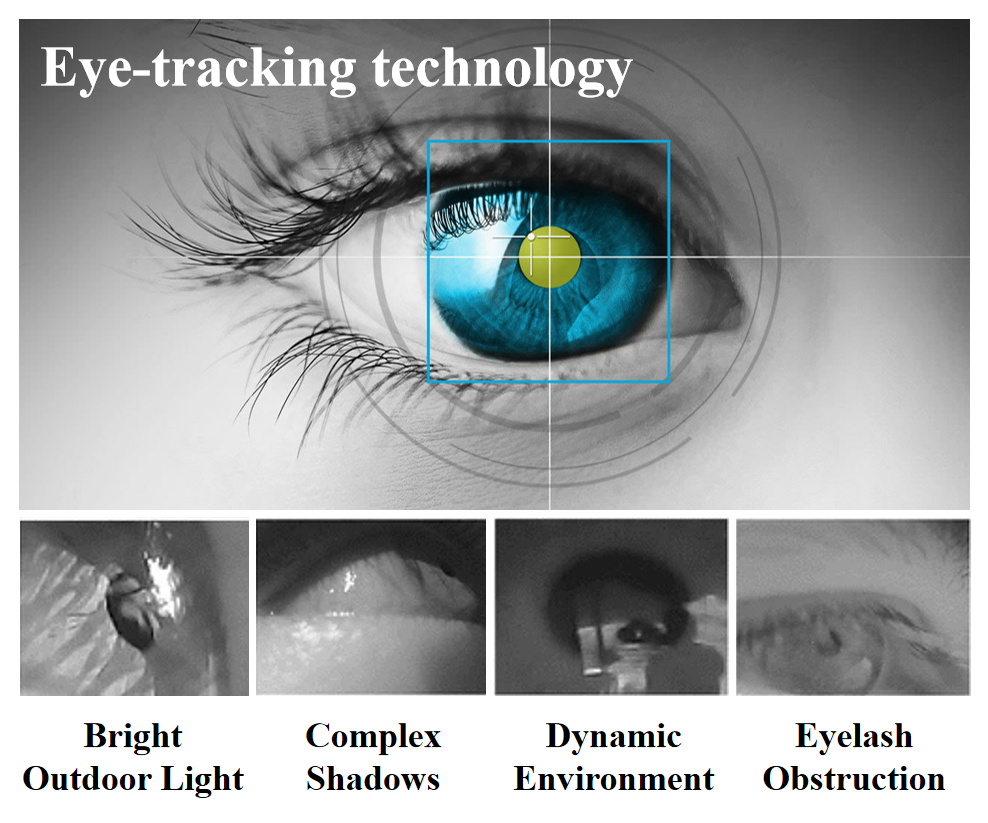
Figure 1. Bottlenecks of eye tracking technology in natural scenes
Main Text
Recently, Prof. Fei Xu from Nanjing University, in collaboration with Chief Physician Songtao Yuan from Jiangsu Province Hospital, has developed an eye-movement feature-enhanced cosmetic contact lens (EMFE contact lens). Based on the principle of spatial-chromatic encodingstrategy, this lens combines comfort, aesthetics, and safety while improving the robustness and accuracy of eye tracking in daily natural environments. The technology is highly mature and can be worn directly by human users.
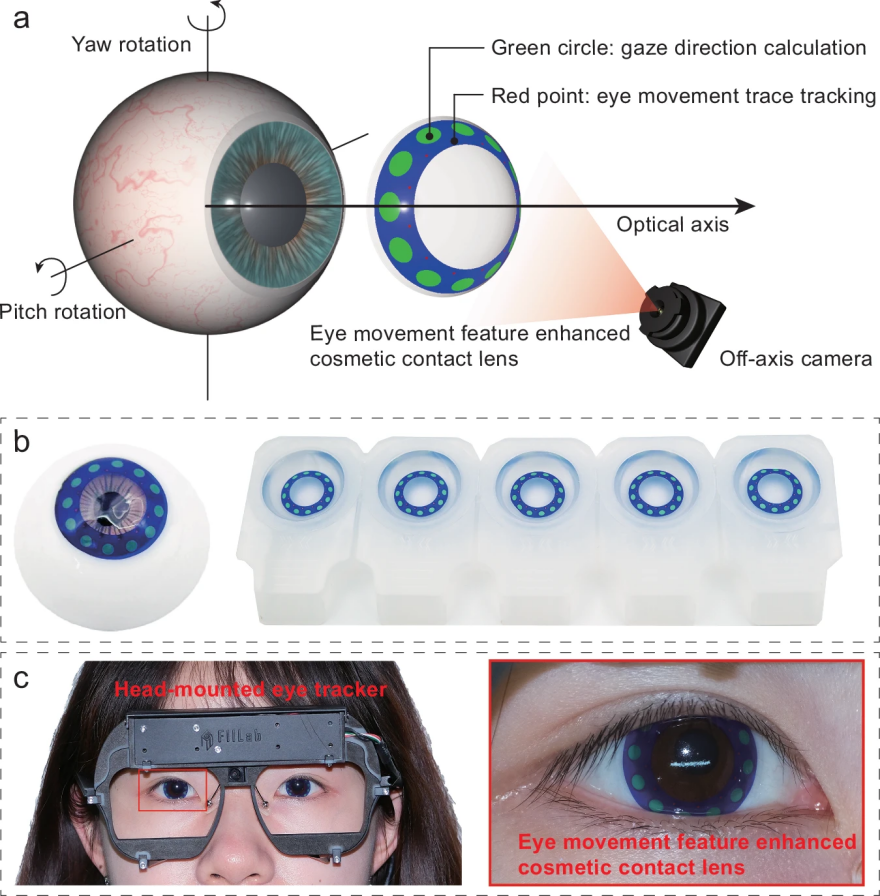
Figure 2. Eye-movement feature-enhanced cosmetic contact lens
The research team designed 12 solid green dots and 12 small red dots on the annular region of the contact lens, leveraging the differences in hue among the three primary colors (RGB) to create a strong color contrast. Under various lighting conditions (indoors, near a window, outdoors), the algorithm achieved a feature localization accuracy of 93%, compared to less than 55% for the naked eye. Additionally, the design tolerates camera placements at large tilt angles up to 80°, enabling lightweight, concealed head-mounted devices. The lens achieved an eye movement angle error of <1° in both eye model and human subject tests, surpassing the requirements of the foveal visual field. The materials and processes used for the lens meet safety standards; cytotoxicity tests showed cell viability >95%, and a 6-hour dye leakage test revealed no discoloration, confirming good biosafety. Each lens weighs only about 20 mg and can be additionally equipped with vision correction functionality.
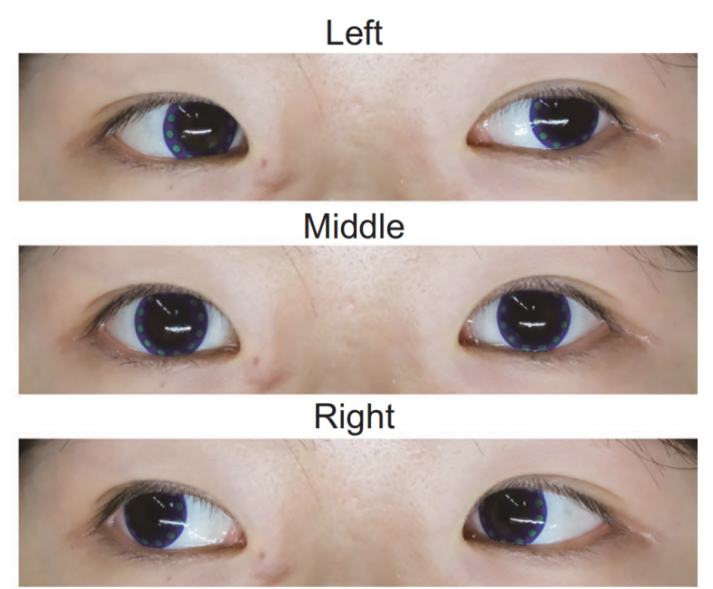
Figure 3. Subjects wearing the EMFE contact lens gazing in different directions
Based on this lens, the research team demonstrated a variety of eye-based interaction applications, including region-of-interest (ROI) recognition on images, reading eye-movement trajectory analysis, and outdoor multi-scene eye tracking. The lens shows great potential in human-centered design, cognitive research, psychological analysis, and future mixed reality applications, opening a new path for lightweight, low-cost daily eye tracking and promising to bring eye-interaction technology truly "out of the lab" and into natural living.
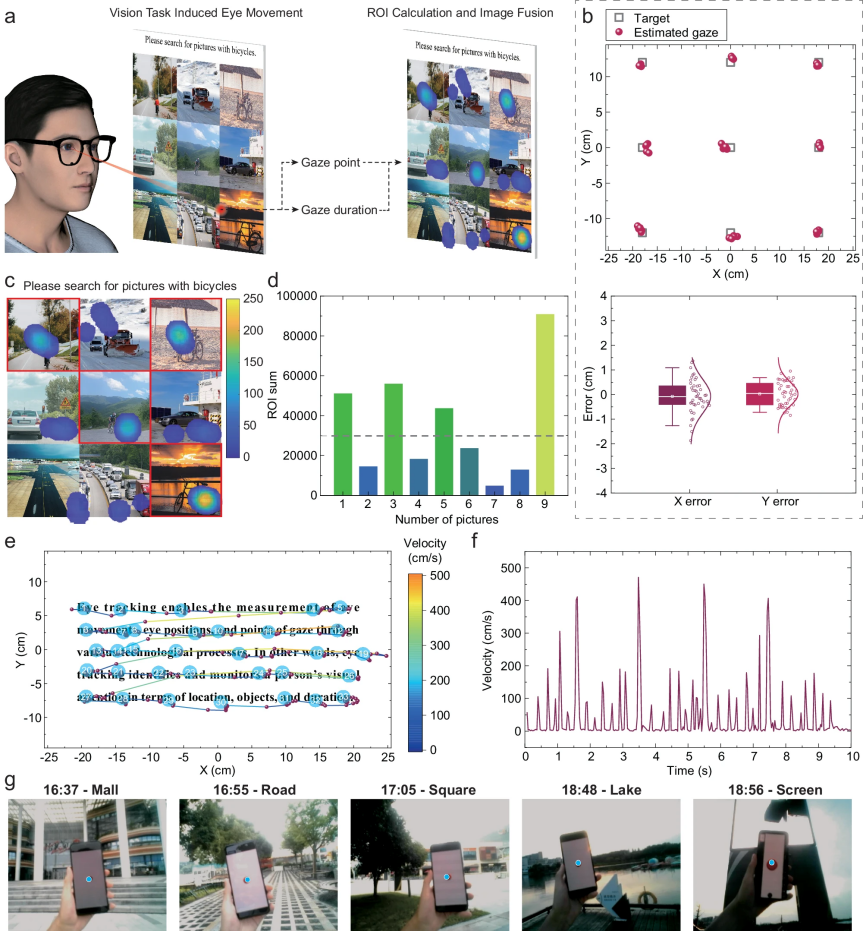
Figure 4. Indoor and outdoor eye-based interaction applications
This work, titled "Spatial-chromatic encoding cosmetic contact lenses for enhanced natural eye tracking", has been published in Nature Communications [Nature Communications, 2026, 17: 2286]. Professor Fei Xu of Nanjing University is the corresponding author, and Dr. Hengtian Zhu, a postdoctoral fellow at Nanjing University, is the first author. Heyu Huang, Huan Yang, Zixu Li, Zhenning Qi, and Yining Xu from Nanjing University made important contributions to the experiments. Chief Physician Songtao Yuan and Dr. Yuan Fang from Jiangsu Province Hospital, Assistant Professor Yifeng Xiong from Nanjing University, and Researcher Ye Chen from Nanjing University of Aeronautics and Astronautics provided crucial support for the experiments.
This research was funded by National Key R&D Program of China(2021YFA1401103), National Natural Science Foundation of China(62305153 and 62501260), Natural Science Foundation of Jiangsu Province (BK20243014), Quantum Science and Technology-National Science and Technology Major Project (2021ZD0300700), the ChinaPostdoctoral Science Foundation (2024M761393 and 2025T180154),Basic Research Program of Jiangsu (BK20251253), and Jiangsu FundingProgram for Excellent Postdoctoral Talent (2025ZB039).
Original link: https://doi.org/10.1038/s41467-026-68918-y